LEASED AND PUBLIC LAND
Fence the lease,not the land
Take on more transient ground without committing capital you can never recover. Deploy a herd, then leave the land exactly as you found it.
Listen to this article
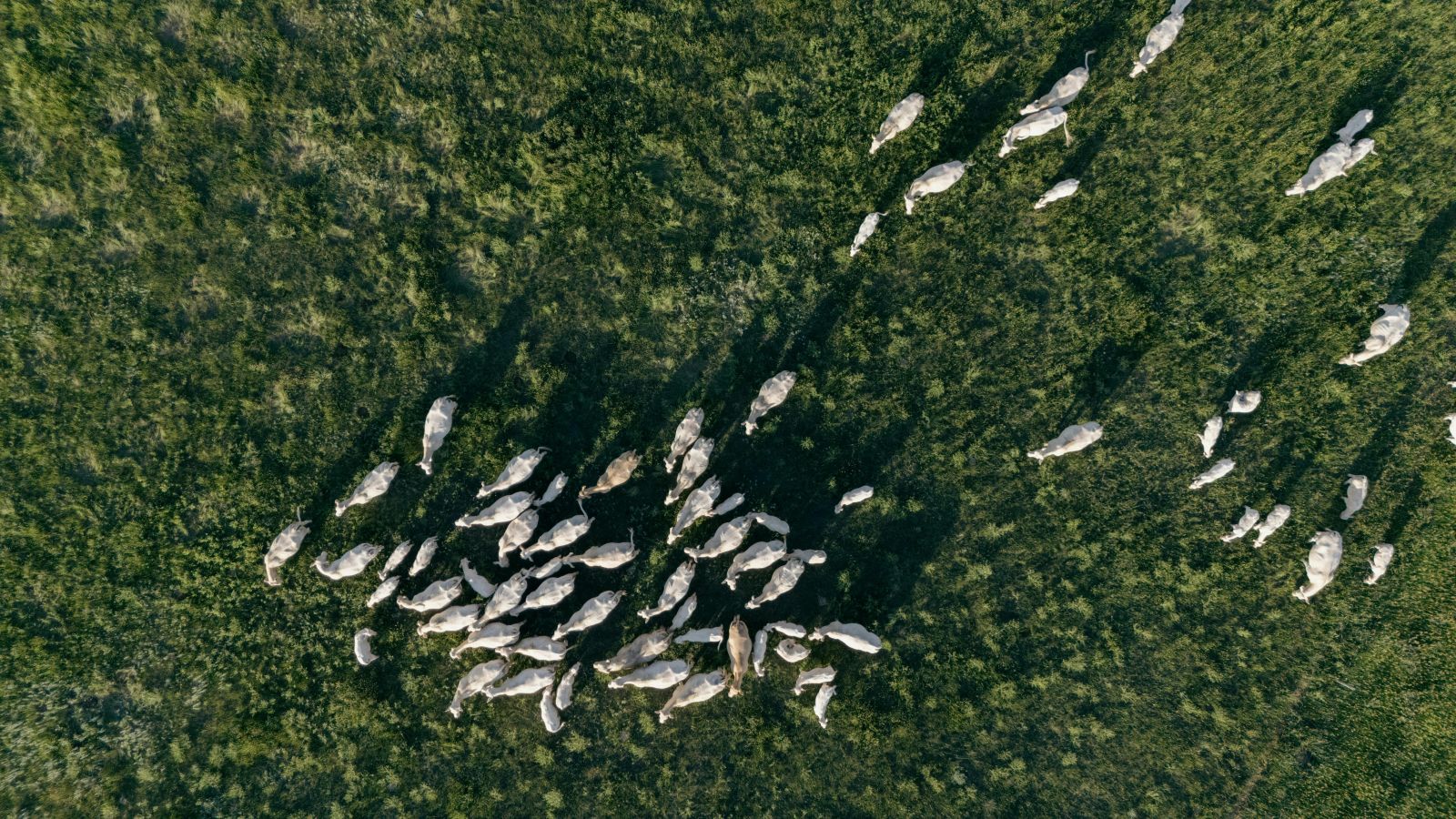
Every post driven into a lease is capital you will never see again. Every gate hung on someone else's boundary is a conversation you will have when the term is up. So the country you wanted usually gets passed on. Not because the feed is not there. The fencing maths just does not work.
Deploy a herd. The boundary is software.
Drop the base station on existing infrastructure or a temporary post. Fit the neckbands. Draw the lines to match the lease to the metre, including the off-limits corners, the riparian buffer the lease specifies, and the exclusions a permit requires. The cattle learn the boundary inside a few days.
Pull them out at lease end and the land is exactly as you found it. No posts to recover, no wire to roll up. The base station leaves on the truck with the animals.
Hunewill Ranch has been running cattle in California and Nevada for six generations. The core of the operation sits on BLM and Forest Service grazing permits covering more than 230,000 acres across three valleys.
Before Gallagher eShepherd™ the family could graze only a fraction of it. Large sections of the allocation went unused because there was no practical way to hold cattle there, and building fence across that terrain was never realistic. Good feed sat idle for generations.
Then there is the work of finding them again.
A gather in that country had historically taken a full crew more than two days of riding, followed by more days tracking down stragglers. With eShepherd the same gather was completed in six hours, and Dalton Hunewill could say they were 100% clean afterwards. One season the counts came up short and the family spent a combined two weeks driving the range, checking every corner by hand. Since deploying eShepherd they have kept cattle off the adjacent highways entirely.
On country you do not own, the record matters as much as the fence.
Instead of occasional site visits and rough estimates, the Hunewills can show the agencies that manage the land where their cattle actually grazed, and for how long. That gives the agency real evidence instead of a guess. It also makes the harder asks possible: keeping cattle off streams where Lahontan cutthroat trout are being reintroduced, or out of wilderness study areas that matter to local sage grouse.
The lease pays back faster because the entry cost is so much lower. The marginal block becomes a real opportunity instead of a wishlist item, and the next offer becomes a yes instead of a maybe.
For the contract grazier, whose whole business is other people's cattle on other people's land, the fencing capex that used to decide which blocks were viable goes to zero. Where carrier coverage runs out, the base station's private LoRa network carries the link, so remote lease country stops being the limit.
Leave the land as you found it.
And take the record with you.