SCALE AND TERRAIN
Big andbroken country
The country that is hardest to fence is usually the country worth running. A software boundary costs the same across a steep face as across a flat.
Listen to this article
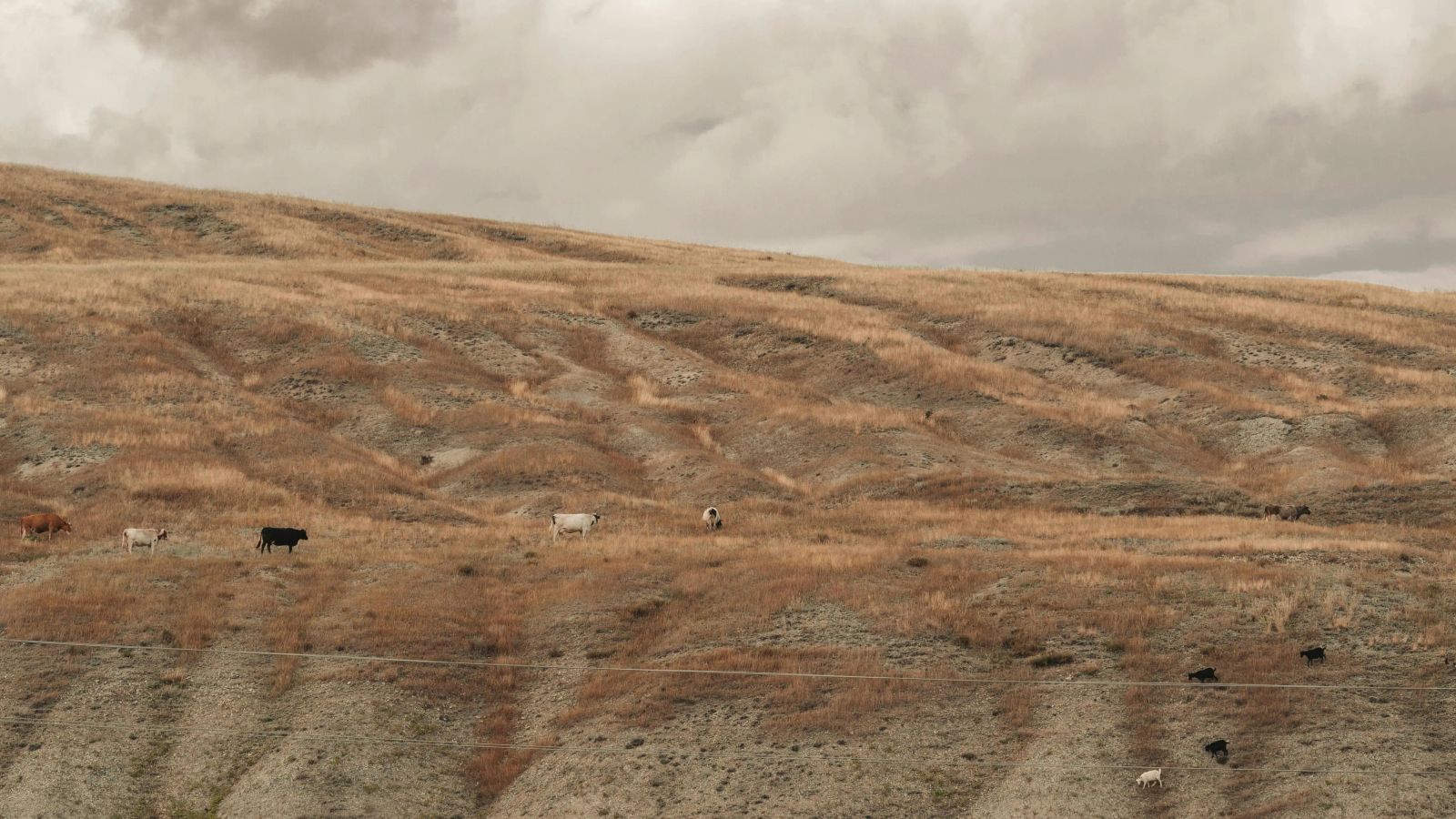
Barbed wire has a hidden cost and most operations have stopped counting it. The repair labour after every storm. The drift across a generation. The replacement capex every twenty years. The whole days a good stockman spends driving the line looking for the break before the mob finds it.
Then there is the fence you never built. The subdivision you needed but could not justify. The cell you wanted to graze but could not reach. That is the real cost. Not the wire you put up, the country you never worked properly.
A line drawn across a steep face costs the same as a line drawn across a flat.
Software boundaries do not care about contour, timber, or distance. The gully system gets subdivided. The shaded face that has never been touched comes into rotation. The back block that used to run as one uncontrolled paddock gets managed like the rest of the place.
Cattle walk to the line, hear the audio cue, and turn, the same way they learn any piece of country.
Jorgensen Land & Cattle runs 1,500 Angus across 15,000 acres of South Dakota native prairie, with no permanent fence on the rotation paddocks. Prairie responds to short, intense impact and long rest, and doing that conventionally means miles of temporary wire and a crew that does nothing but shift it.
Now there are six breaks per quarter section, all drawn on the same map, and a mob move takes 30 minutes instead of two days. The cattle were trained inside two weeks.
Distance costs as much as wire, just in fuel and time instead of posts. At Las Islas Ranch in the Texas brush country, Vannie Collins says the wire was never the expensive part. Every storm meant a day of repairs, every brush fire meant another stretch to rebuild, and every rotation meant another gate somebody had to drive thirty miles to open.
Country that used to get one long graze now sees the cattle move through in eight or nine breaks. Three full-time roles came off fence maintenance and went onto managing the herd.
Carrier maps look good on a website and stop working at the second ridge. Every Gallagher eShepherd™ base station runs a private LoRa network alongside its cellular backhaul, so the cattle talk to the base station over radio that propagates across hills, through timber, and down into the gullies where cellular does not go.
The dead zone on the carrier map is no longer the limit of where you can run virtual fencing. The solar collector and battery were specified for shaded, timbered country, not for a flat paddock on a clear day.
The other thing that breaks at scale is the
Hunewill Ranch runs BLM and Forest Service grazing permits across more than 230,000 acres in three valleys. A gather in some of that country had historically taken a full crew more than two days of riding, then extra days chasing stragglers. With eShepherd the same gather was completed in six hours, and for the first time the family knew they had not left an animal behind. One season the counts came up short and they spent a combined two weeks driving the range.
The fence moves with the feed.
Not the other way around.